
Advisory Board
The Advisory Board (AB) acts as a voluntary, multi-actor consultation body for the INSPIRE project, providing the consortium with strategic guidance and feedback in key stages of the project. The INSPIRE AB members provide their expertise based on their stakeholder groups’ perspectives with meaningful feedback on the project’s ideas, pilot actions and project outcomes.
The Board consists of 7 members, representing key stakeholder groups of the project, who provide feedback to the project’s work based on their individual capacity and areas of expertise. See each of our AB member below:
Shareen Elnaschie

Shareen Elnaschie is a healing-centred architectural designer, creative researcher, and educator working at the intersection of humanitarian aid and sustainable development. With extensive international experience, she champions inclusive co-design and participatory practices that centre community agency, knowledge, and the capacity to shape their own environments.
She is founding director of the Office of Displaced Designers, a non-profit initiative that leverages design and education to support communities affected by displacement and marginalisation through access to networks, resources, and training.
In addition to her non-profit work, Shareen offers design consultancy and strategic advisory services to organisations addressing issues of forced migration, inclusion, and socio-spatial justice.
She regularly lectures and critiques at academic institutions and currently coordinates the Master of International Cooperation in Sustainable Emergency Architecture (MICSEA) at the Universitat Internacional de Catalunya.
LinkedIn: Shareen Elnaschie
Rosa M. Fumàs i Pascual

Rosa M. Fumàs i Pascual, holds a degree in Social Work, a Master’s in Public Management from ESADE, a Diploma in Managerial Function in Social Services, a Master’s in Family Mediation, and a Postgraduate Degree in Primary Social Services Care.
She has participated in conferences and published works.
She has professional experience of 34 years in Social Services in a rural setting, and 20 years as the Technical Director of Social Services at the Pallars Jussà County Council ( Catalonia – Spain ). Currently, she is working as a technician at the Directorate-General for Social Services on the wSocial digital transformation project.
LinkedIn: Rosa M Fumàs
Giorgos Chatzinakos

Dr Giorgos Chatzinakos is a postdoctoral researcher at the University of Thessaly and a member of the environmental NGO Callisto. He studied Political Science and Public Administration at the University of Athens and holds an interdisciplinary MA in European Urban Cultures (Vrije University of Brussels, Tilburg University, Manchester Metropolitan University, Estonian Academy of Arts).
He received his PhD from Manchester Metropolitan University with a focus on the everyday and cultural life of the suburbs. His current research and applied work focus on participatory governance, convivial conservation, and socially just ecological transitions in rural and mountainous regions.
Giorgos has led stakeholder engagement and co-creation processes in several EU-funded projects, including LIFE ARCPROM, LIFE BEAR SMART CORRIDORS, and LIFE WILD WOLF.
He is currently exploring Smart Villages as frameworks for integrated biodiversity protection, rural revitalisation, and commons-based development. His work emphasises the role of local communities in shaping resilient and democratic pathways toward sustainability.
LinkedIn: Giorgos Chatzinakos
Sofia Santos Nunes

Sofia Santos Nunes is, currently, a PhD researcher at Faculty of Medicine, McGill University in Montreal, Canada. Her research topics focuses on enhancing access and quality of healthcare services for migrant older populations through the use of social robotics and participatory approaches to technology. She has recently been a project officer at Social Services Europe responsible for the Care4Skills project and at AGE Platform Europe responsible for, among others, the Laurel project.
Sofia has a background in Clinical and Social Psychology with an experience of 7 years working in European and community-based projects in Belgium, Portugal, Spain and Colombia in the fields of healthcare, mental health promotion and ethical development of artificial intelligence.
In 2020, she was closed involved in the project of developing a social village in Penela, Portugal, as part of the ‘smart village living lab’ strategy/membership of European Network of Living Labs and implementing technology-based projects with older people in a care service provider in Extremadura, rural Spain.
LinkedIn: Sofia Santos Nunes
Konstantinos Papadakis

Konstantinos Papadakis is a specialist in social economy and rural development with extensive experience in EU policy and grassroots innovation. He serves as Vice-Chair for EU & International Policies at PASE KALO, and is the Chairman of both the Social Economy Union of Crete (CretanSCENT) and AgroID Social Cooperative Enterprise (SCE), which focuses on rural revitalisation and the twin digital and green transition for rural areas.
Mr. Papadakis is a member of the European Commission’s GECES expert group (DG EMPL) and member of the Greek Ministry of Agriculture’s SP CAP Monitoring Committee and the Region of Crete’s Monitoring Committee for the Regional Operational Program “Crete” 2021-2027, advising on social economy and social innovation.
He also acts as an Ambassador of the EU’s Social Economy Platform (DG GROW). His work bridges local engagement with European-level strategy, promoting and advocating for inclusive development, social entrepreneurship, and non-disruptive innovative approaches for empowering and building resilient and smart communities.
LinkedIn: Konstantinos Papadakis
Mila Shamku
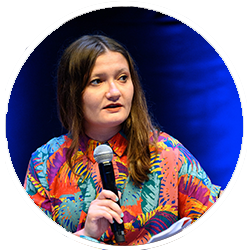
Mila Shamku is the Coordinator of Social Services Europe, Europe’s leading organisation representing not-for-profit social service providers. She is also an independent researcher specialising in EU affairs, with expertise spanning employment, social affairs, industrial relations, entrepreneurship, equalities, anti-far-right strategies, regional policies, and youth rights.
She has over a decade of senior experience in European and international labour movements, including trade unions and cooperatives.
Shamku has served on the Management Committee of the Social Platform and as an expert for various working groups in the European Commission and in the European Economic and Social Committee. A published author committed to Social Europe, she holds dual master’s degrees in political science from the University of Turin and Sciences Po Grenoble.
LinkedIn: Mila Shamku
Ecehan Balta

Ecehan Balta is a sociologist and political scientist with extensive experience in labour rights, gender equality, and rural and local development. She has worked for over 25 years as a consultant for international organisations including the ILO and UNICEF, specialising in social policy, inclusive training programmes, and social impact assessments.
A founding member of Yerküre Local Studies Cooperative, she leads research and education projects that centre climate justice, rural social movements, and community resilience. Her work bridges academic insight and grassroots activism, particularly in contexts of ecological transformation and feminist economic critique. She has authored widely on social reproduction, environmental justice, and the political economy of care.
As a member of the INSPIRE Advisory Board, she contributes expertise on participatory methodologies and transformative rural development to support the project’s aims for equitable and sustainable social innovation.
LinkedIn: Ecehan Balta, PhD.
Shareen Elnaschie
Shareen Elnaschie is a healing-centred architectural designer, creative researcher, and educator working at the intersection of humanitarian aid and sustainable development. With extensive international experience, she champions inclusive co-design and participatory practices that centre community agency, knowledge, and the capacity to shape their own environments.
She is founding director of the Office of Displaced Designers, a non-profit initiative that leverages design and education to support communities affected by displacement and marginalisation through access to networks, resources, and training.
In addition to her non-profit work, Shareen offers design consultancy and strategic advisory services to organisations addressing issues of forced migration, inclusion, and socio-spatial justice.
She regularly lectures and critiques at academic institutions and currently coordinates the Master of International Cooperation in Sustainable Emergency Architecture (MICSEA) at the Universitat Internacional de Catalunya.
LinkedIn: Shareen Elnaschie
Rosa M. Fumàs i Pascual
Rosa M. Fumàs i Pascual, holds a degree in Social Work, a Master’s in Public Management from ESADE, a Diploma in Managerial Function in Social Services, a Master’s in Family Mediation, and a Postgraduate Degree in Primary Social Services Care.
She has participated in conferences and published works.
She has professional experience of 34 years in Social Services in a rural setting, and 20 years as the Technical Director of Social Services at the Pallars Jussà County Council ( Catalonia – Spain ). Currently, she is working as a technician at the Directorate-General for Social Services on the wSocial digital transformation project.
LinkedIn: Rosa M Fumàs
Giorgos Chatzinakos
Dr Giorgos Chatzinakos is a postdoctoral researcher at the University of Thessaly and a member of the environmental NGO Callisto. He studied Political Science and Public Administration at the University of Athens and holds an interdisciplinary MA in European Urban Cultures (Vrije University of Brussels, Tilburg University, Manchester Metropolitan University, Estonian Academy of Arts).
He received his PhD from Manchester Metropolitan University with a focus on the everyday and cultural life of the suburbs. His current research and applied work focus on participatory governance, convivial conservation, and socially just ecological transitions in rural and mountainous regions.
Giorgos has led stakeholder engagement and co-creation processes in several EU-funded projects, including LIFE ARCPROM, LIFE BEAR SMART CORRIDORS, and LIFE WILD WOLF.
He is currently exploring Smart Villages as frameworks for integrated biodiversity protection, rural revitalisation, and commons-based development. His work emphasises the role of local communities in shaping resilient and democratic pathways toward sustainability.
LinkedIn: Giorgos Chatzinakos
Sofia Santos Nunes
Sofia Santos Nunes is, currently, a PhD researcher at Faculty of Medicine, McGill University in Montreal, Canada. Her research topics focuses on enhancing access and quality of healthcare services for migrant older populations through the use of social robotics and participatory approaches to technology. She has recently been a project officer at Social Services Europe responsible for the Care4Skills project and at AGE Platform Europe responsible for, among others, the Laurel project.
Sofia has a background in Clinical and Social Psychology with an experience of 7 years working in European and community-based projects in Belgium, Portugal, Spain and Colombia in the fields of healthcare, mental health promotion and ethical development of artificial intelligence.
In 2020, she was closed involved in the project of developing a social village in Penela, Portugal, as part of the ‘smart village living lab’ strategy/membership of European Network of Living Labs and implementing technology-based projects with older people in a care service provider in Extremadura, rural Spain.
LinkedIn: Sofia Santos Nunes
Konstantinos Papadakis
Konstantinos Papadakis is a specialist in social economy and rural development with extensive experience in EU policy and grassroots innovation. He serves as Vice-Chair for EU & International Policies at PASE KALO, and is the Chairman of both the Social Economy Union of Crete (CretanSCENT) and AgroID Social Cooperative Enterprise (SCE), which focuses on rural revitalisation and the twin digital and green transition for rural areas.
Mr. Papadakis is a member of the European Commission’s GECES expert group (DG EMPL) and member of the Greek Ministry of Agriculture’s SP CAP Monitoring Committee and the Region of Crete’s Monitoring Committee for the Regional Operational Program “Crete” 2021-2027, advising on social economy and social innovation.
He also acts as an Ambassador of the EU’s Social Economy Platform (DG GROW). His work bridges local engagement with European-level strategy, promoting and advocating for inclusive development, social entrepreneurship, and non-disruptive innovative approaches for empowering and building resilient and smart communities.
LinkedIn: Konstantinos Papadakis
Mila Shamku
Mila Shamku is the Coordinator of Social Services Europe, Europe’s leading organisation representing not-for-profit social service providers. She is also an independent researcher specialising in EU affairs, with expertise spanning employment, social affairs, industrial relations, entrepreneurship, equalities, anti-far-right strategies, regional policies, and youth rights.
She has over a decade of senior experience in European and international labour movements, including trade unions and cooperatives.
Shamku has served on the Management Committee of the Social Platform and as an expert for various working groups in the European Commission and in the European Economic and Social Committee. A published author committed to Social Europe, she holds dual master’s degrees in political science from the University of Turin and Sciences Po Grenoble.
LinkedIn: Mila Shamku
Ecehan Balta